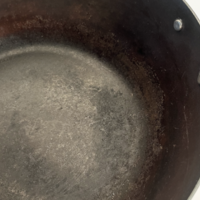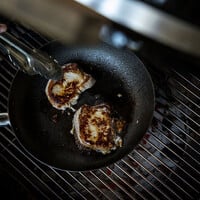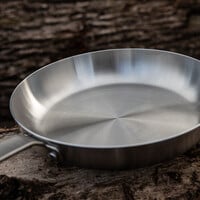
It is very good for the service life of your cast iron and carbon steel pan to season it again regularly. You can do this by putting your pan in the oven. By heating and cooling slowly and heating the pan in the oven for a long time, the cast iron becomes more rust-resistant and the non-stick coating burns in more evenly. Don't have an oven, or in a hurry? Then you can also season the pan on the stove. This is slightly faster, but less resistant. In any case, follow the 6 steps below and at step 7, choose whether you are an oven person or a stove type.
If there is rust on your pan, remove it first with a scouring pad, fine sandpaper or steel wool. You can also soak an old cloth in vinegar and rub it over the rust spots.
Wash the pan in very hot water and a dishwashing brush or scouring pad. Since you are going to season it again, it's okay to use some washing-up liquid now. Just do some really vigorous scrubbing. And then dry your pan. You know: rubbing it with a tea towel.
Now heat the pan on the stove on a low setting for a few minutes. This opens the pores of the pan, and ensures that the pan is really completely dry.
Drizzle a small amount of oil onto a lint free cloth and rub the pan thoroughly. Do not apply oil to the handle, as it can turn brown. You can use many natural oils, but avoid cold pressed olive oil. It is intended for cold preparations and burns too quickly at high temperatures, which prevents an even protective layer from forming. Refined olive oil can handle heat much better and is therefore suitable. Do you want the best and most durable result for your pan? Then it is best to choose linseed oil, grapeseed oil or sunflower oil. Alternatively, you can use our own seasoning oil. These oils can withstand high temperatures well and create a strong, even protective layer.
An important step. Grab a clean, lint-free rag and remove the oil from the pan again. Strange, you'll think, because that's why you would rub some on first and then rub it off again? Well, you don't rub away everything, a thin layer of oil remains on the pan. And that is exactly what we want. Besides world peace, of course.
Turn on the extractor fan or open a window: this process can be quite smelly. It is not toxic, mind you, but not everyone likes the smell.
Now you are going to burn that layer of oil left in the pan.
In the oven
Place your pan upside down on the rack in the oven and set your oven to 350°C, or gas setting 8/9. After an hour, switch off the oven and let the pan cool in the oven. Once the pan has cooled completely, you can store it in a dry place. Still not quite clear? Then take a look at the video below.
On the stove
Put your pan on the stove. Heat the pan until the oil starts to smoke. So that's the idea. Wait a few more minutes and turn off the stove. Again, we have made an instructional video for you. Check it out quickly.
Once the pan has cooled completely, you can store it in a dry place. Your pan has now regained its beautiful black appearance. You could repeat this treatment again, as the more you season the pan, the better the natural non-stick coating becomes. You can also just use it a lot, which also works like a charm.

Restoring the handle of your pan
With the steps above, you'll bring back the attractive look of your pan. If the handle still looks discolored after following these steps, just apply a bit of dish soap and a sponge to return the handle to its former glory.
Ready to cook with pure cast iron?
By seasoning your pan again with oil, you give it a new protective layer and keep it in top condition. With proper care, a cast iron pan can last for many years and only gets better over time. Looking for new cast iron pans with a natural non stick layer? Explore our collection and choose the pan that fits your cooking style.
Do you sometimes notice small black pieces on your food while cooking? This can occur with both cast iron and carbon steel pans and is usually caused by small parts of the natural non stick layer coming loose. This layer is made from hardened oil that is baked into the pan during seasoning. It can happen when the seasoning layer is too thick or uneven, when the pan is heated too high without fat, or when it is cleaned too aggressively. The black pieces are not harmful to your health. They are carbon particles from hardened oil, but they can look less appetising. Clean the pan with warm water and a soft brush. In our blogs on cleaning a cast iron pan and cleaning a carbon steel pan, you can read how to do this properly. If needed, re season the pan with one or two thin layers of oil to prevent flaking.