Carbon steel is known for its excellent cooking results. With a carbon steel pan, you cook at high temperatures, achieve a beautiful golden brown crust and build a natural non stick layer that improves the more often you use the pan. There is, however, one important rule: you should always cook with a properly seasoned pan. Without this protective layer, the metal has no release properties and food will stick immediately.
Food sticking to the pan may feel like it happens at random, but there is always a logical reason behind it. Regardless of the pan material, it comes down to how heat and oil work together. When that balance is right, food releases effortlessly. When it is not, food is more likely to stick to the surface of the pan. Combine a pan that is not hot enough with too little oil and you create the perfect conditions for sticking.
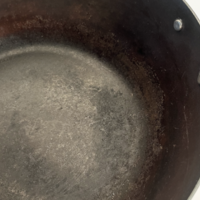
During seasoning, your carbon steel or cast iron pan develops a protective layer that seals the metal. This layer forms when oil hardens at high temperatures and creates a smooth surface from which food releases easily. Without this layer, you are cooking directly on rough metal and almost everything will stick more quickly. With a well seasoned surface, the pan works far more smoothly and improves with every cooking session.
My pan is seasoned and food still sticks. How is that possible?
After seasoning, the pan has an initial protective layer, but this layer is still thin and only improves through regular use. As a result, food may still stick at first, especially with delicate ingredients such as eggs. Other factors that can cause sticking include:
- The pan is not hot enough.
- The ingredients are too moist.
- Too little oil is used.
- You cooked something with a high acid content, such as tomatoes or wine.
- The protective layer is not thick enough yet and needs to be built up further.
- Lack of patience. Sometimes you need to wait until the meat releases on its own.
This is part of the learning process when cooking with carbon steel. The more often you use the pan, the better the layer becomes and the more easily food releases.
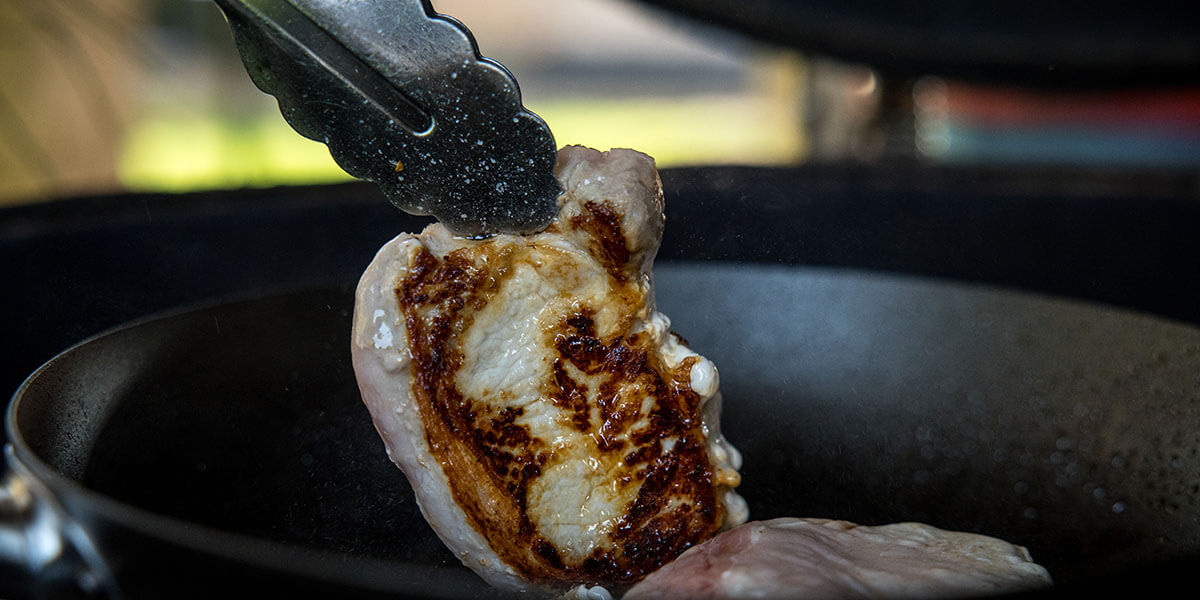
Even with a well seasoned pan, cooking with carbon steel and cast iron requires the right technique. With these cooking tips, you can prevent food from sticking and get the best out of your pan.
Let ingredients come to room temperature
Take the food out of the fridge and allow it to come to room temperature before you start cooking.
Heat the pan gradually
Place the pan on a low to medium heat and allow it to warm up slowly and evenly. Never start on the highest heat straight away to prevent warping.
Add fat to a hot pan
Only add butter or oil once the pan is properly hot. If you are using the pan for the first time, you can be slightly more generous with the fat.
Make sure ingredients are dry
Ensure the food is as dry as possible before it goes into the pan. For example, pat meat or fish dry with kitchen paper.
Leave the food alone in the pan
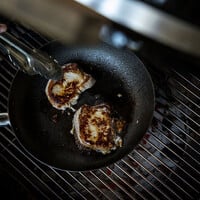
Place the food in the pan and do not move it straight away with a spatula or tongs. Give it time to form a crust.
Be patient
If the food does not release, lower the heat slightly and wait. You will see that it will come loose on its own.
Looking for a carbon steel pan?
Would you like to start cooking with carbon steel yourself and experience how these pans improve with use? Discover our collection of carbon steel pans and choose a pan that suits your cooking style.